
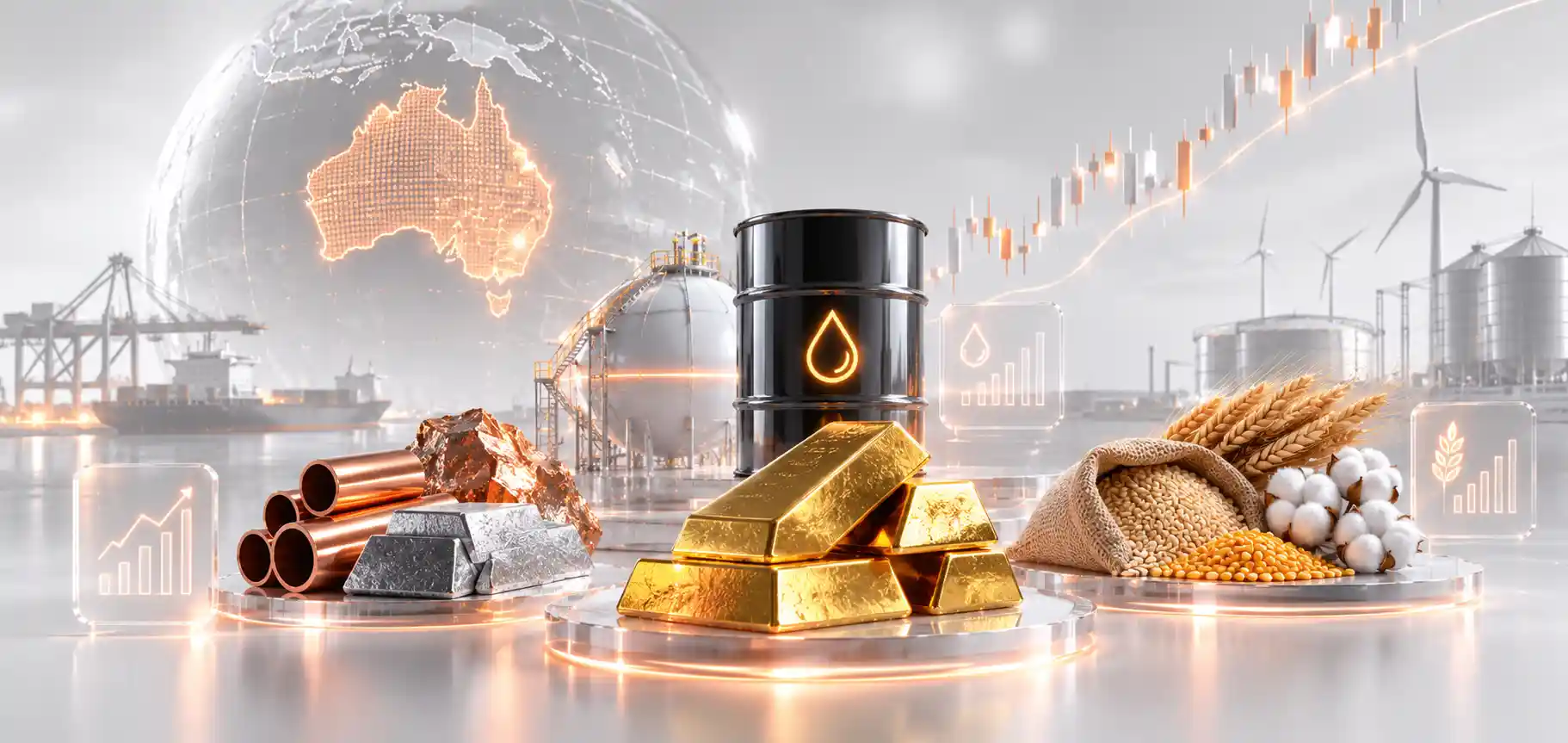
For many Aussies, commodities are part of the background story rather than the portfolio toolkit. We read about iron ore shipments, oil prices and droughts affecting crops, but when it comes to building a personal investment strategy, most of the attention goes to shares, property and super. In 2026, that is slowly changing. More Australian traders and investors are realising that energy, agriculture and metals are not just headlines — they are levers that can help hedge an Aussie-style portfolio against inflation shocks, currency moves and local economic surprises.
The key to commodities trading in Australia is to treat commodities not as wild speculations but as purposeful tools. That means understanding how different commodity sectors behave, how they interact with Australia’s economy and currency, and how they can either stabilise or amplify portfolio risk. At Langston Wealth, this shift is visible in conversations with clients: instead of asking “should I punt oil or gold?”, people are asking “how can energy, agriculture and metals honestly help my overall plan?” That change in wording often leads to better decisions.
Why commodities matter specifically for Australians
Australia is tied to commodities in a way many countries are not. The economy is deeply connected to resource exports, agricultural production and energy markets. When global demand for iron ore, coal or gas changes, local jobs, corporate profits and tax receipts can all shift. Similarly, when weather patterns and global supply chains affect agricultural prices, Aussies feel the impact through food costs and rural incomes.
For an investor or trader sitting in Brisbane, Sydney or Perth, ignoring commodities is like ignoring part of the country’s heartbeat. You do not need to become a full-time oil trader, but you do benefit from understanding how commodity cycles can affect:
- The performance of ASX resource and agriculture-linked stocks.
- The value of the Australian dollar relative to other currencies.
- Inflation trends and broader cost-of-living pressures.
Once you see that link, using commodities as a hedge becomes a practical extension of resource cycle trading rather than an abstract idea. It becomes a practical way to respond to forces that already shape everyday life down under.
Energy, agriculture and metals: three distinct hedging tools
“Commodities” is a broad term. Lumping everything together hides important differences between sectors. Energy, agriculture and metals each have their own drivers, risks and hedging roles. Smart Aussies break them apart before they think about adding exposure.
Energy: oil, gas and the cost of movement
Energy markets affect transport, logistics, manufacturing and households. Oil prices shape the cost of fuel, while gas prices influence electricity, industrial processes and heating. For Australians, energy shocks can show up in petrol bills, airline tickets and utility costs. When energy prices rise sharply, inflation often feels stronger and corporate margins can be squeezed.
Trading or investing in energy-linked commodities — directly through instruments or indirectly via energy companies — can help balance that impact. If higher energy prices hurt parts of your portfolio, having some exposure that benefits from energy strength can reduce the overall hit. The trick is to avoid going all in and to recognise that energy markets themselves are noisy and politically sensitive.
Agriculture: food, weather and global demand
Agriculture commodities include grains, livestock and softs like sugar and coffee. Their prices are shaped by weather, global supply chains, trade policy and shifting diets. For Aussies, agriculture matters both as a domestic industry and as part of the cost of living. Droughts, floods or global disruptions can push prices up and ripple through the economy.
Hedging with agriculture-linked commodities is less common among retail traders than hedging with metals or energy, but it can be a meaningful addition for those who follow rural sectors closely. It requires a tolerance for weather-related volatility and a willingness to track more specialised information than simple price charts.
Metals: industrial cycles and “safe haven” narratives
Metals split loosely into two groups: precious metals such as gold and silver, and industrial metals like copper, aluminium and nickel. Precious metals often behave as “risk stories” — sometimes as safe havens, sometimes as speculative trades — while industrial metals track global manufacturing and infrastructure cycles.
For Australians, metals have both local and international importance. The ASX is heavily influenced by miners, and global demand for industrial metals shapes resource revenues and currency moves. Gold, meanwhile, can play a psychological role for investors seeking a store of value, although in practice it can act like a complex mix of currency, interest rate and sentiment factors rather than a simple “safety switch”.
Commodities versus traditional hedges: what is different?
Traditional hedging tools often include cash, bonds, defensive equities and sometimes currency positions. Commodities add something different: they sit closer to the physical realities of supply, demand and production. That difference is both useful and challenging.
| Hedge Type | Main Strength | Main Limitation |
| Cash | Immediate liquidity, no market risk | Exposed to inflation and low returns over time |
| Bonds | Income, lower volatility than equities in many environments | Sensitive to interest rate moves and credit risk |
| Defensive Equities | Resilient earnings in downturns, potential dividends | Still linked to equity market sentiment |
| Commodities | Direct exposure to physical prices and inflation forces | High volatility and complex drivers |
The takeaway for Aussies is not that commodities replace traditional hedges. Instead, they complement them. Energy, agriculture and metals can respond differently to shocks than shares or bonds, which is exactly the point of a hedge. But they must be sized carefully and chosen with clear purposes, or they risk turning into another source of stress.
Building an “Aussie-style” commodities sleeve
Not every Australian needs commodities in their portfolio, and not every portfolio should hold the same mix. A practical way to think about an “Aussie-style” commodities sleeve is to design it around the risks you actually face: inflation pressure, resource exposure via the ASX, and the global economic cycles that affect both.
A simple framework might involve:
- Defining your core risks: list the main forces that worry you — inflation, energy costs, commodity-linked employment, currency shifts.
- Matching sectors to risks: decide which commodities logically relate to those concerns (for example, energy for fuel costs, metals for resource exposure, agriculture for food prices).
- Choosing vehicles: select instruments or products that provide access without excessive complexity, whether that is through listed vehicles, contracts or other structures.
- Setting size limits: cap the percentage of your portfolio that can sit in commodities, and within that, cap each sector.
- Establishing review points: decide ahead of time when you will reassess — quarterly, around major macro events, or when key price thresholds are reached.
This framework does not require predicting every commodity move. It requires clarity about why commodities are in your portfolio at all. That clarity tends to reduce reactionary trading when prices swing.
Energy hedging: keeping fuel and power shocks in perspective
In an Australian context, energy shocks can come from global events, regional tensions, supply disruptions or policy changes. When oil and gas prices jump, the ripple effects extend to transport firms, airlines, logistics companies and households. Using energy-linked exposures as a hedge can help rebalance the portfolio impact, but it must be done with respect for volatility.
Practical steps might include:
- Limiting energy exposure to a small, defined slice of your total investments.
- Favouring more liquid instruments over thin markets that are harder to exit.
- Avoiding heavy leverage; energy markets can move quickly on headlines.
- Considering both direct energy prices and related equities, not just one or the other.
At Langston Wealth, the emphasis tends to be on using energy exposures to balance particular risks rather than to chase every swing. For example, if your business or household costs are sensitive to fuel prices, having some disciplined energy exposure can make price spikes feel less one‑sided. But that does not mean turning your portfolio into an energy-heavy speculation.
Agriculture hedging: recognising the role of food and climate
Agriculture markets are nuanced. Weather patterns, climate trends, trade policies and global demand shifts all play a role. For Australians, agriculture is both a local industry and a channel through which global shocks can show up at the supermarket.
Hedging through agriculture-linked commodities can make sense for some Aussies, particularly those with rural ties or exposure to agricultural businesses. It requires:
- Interest in following seasonal and climate-related information.
- Patience with markets that may be quiet for long periods then move sharply.
- Recognition that agricultural hedges are not always straightforward or liquid.
For many everyday investors, agriculture may remain a smaller part of the commodities sleeve, but understanding its drivers still helps when considering how resource and rural sectors fit into an Aussie-style portfolio.
Metals hedging: balancing miners, growth and “safe haven” stories
Metals occupy a special place in the Australian psyche. Resource companies dominate parts of the ASX, and global demand for metals influences the economy, currency and market confidence. For traders down under, metals hedging can mean two different things:
- Industrial metals: gaining or balancing exposure to global manufacturing and infrastructure cycles.
- Precious metals: holding assets like gold as potential counterweights to certain types of risk.
Industrial metals can be useful when you want to lean into, or hedge against, global growth trends. Precious metals, especially gold, can act as partial hedges against currency concerns, geopolitical shocks or perceived monetary instability. But in both cases, the behaviour of metals is complex and must be understood beyond simple slogans.
A few grounded principles include:
- Recognising that gold does not always rise when equities fall; context matters.
- Understanding that industrial metals often track growth expectations more than simple “risk on/risk off” stories.
- Limiting metals positions so that they hedge rather than dominate the portfolio.
For many Aussies, metals exposure is already present via resource stocks. Adding direct metals-related instruments changes the balance and should be be considered alongside a broader metals portfolio link to avoid unintended concentration.
Risk management for commodities: avoiding the “hedge that became the main bet”
One recurring problem in commodities trading is that hedges quietly turn into primary bets. A trader starts with a small position to balance fuel cost risk or inflation worries, then adds more as prices move, eventually becoming more exposed to commodities than to the original portfolio they were meant to protect.
To avoid this, Aussies can use a few blunt but effective rules:
- Set maximum commodity allocation: decide a ceiling for total commodities exposure and stick to it.
- Define hedging purpose in writing: note down why a particular commodity position exists and what it is meant to offset.
- Limit leverage: treat margin and leveraged products with caution; they can turn small moves into large swings.
- Separate hedging and speculation: keep hedging positions structurally different from short-term trading experiments.
At Langston Wealth trading platform, a common line of discussion is separating “tool” from “temptation”. Commodities are powerful tools. They can also be tempting when prices move quickly. Clear rules help keep them on the tool side of that line.
How an Aussie-style portfolio might look with commodities included
Every portfolio is different, but an Aussie-style structure that includes commodities might share some common elements:
- A core of diversified ASX and global shares, reflecting long-term growth and income goals.
- Some exposure to resource companies, reflecting Australia’s economic base.
- A measured commodities sleeve, split across energy, metals and possibly agriculture, sized according to personal risk tolerance.
- Cash or low-risk assets to provide flexibility and resilience during sharp market moves.
Within this shape, commodities play a supporting role. They help the portfolio respond to shifts in inflation, resource cycles and global demand, but they do not carry the entire narrative. That balance often feels more sustainable for everyday Aussies than either ignoring commodities or making them the centrepiece.